BUSINESS BASICS · 6 min read
AI Is Changing the Cost of Keeping an Outdated Website
AI is making it worth taking another look at a website you have been putting up with for years. When building a better replacement takes less time, the calculation changes. Monthly fees, maintenance, difficult updates and missed opportunities deserve to be compared with what a new site could actually deliver. That is the shift I see coming for small businesses. Plenty of owners know their website could be better. They have simply decided that replacing it would cost too much or create too much disruption. That decision may have made sense a few years ago. It deserves a fresh look today.
Mark Abplanalp · Kodecite
Published · Updated
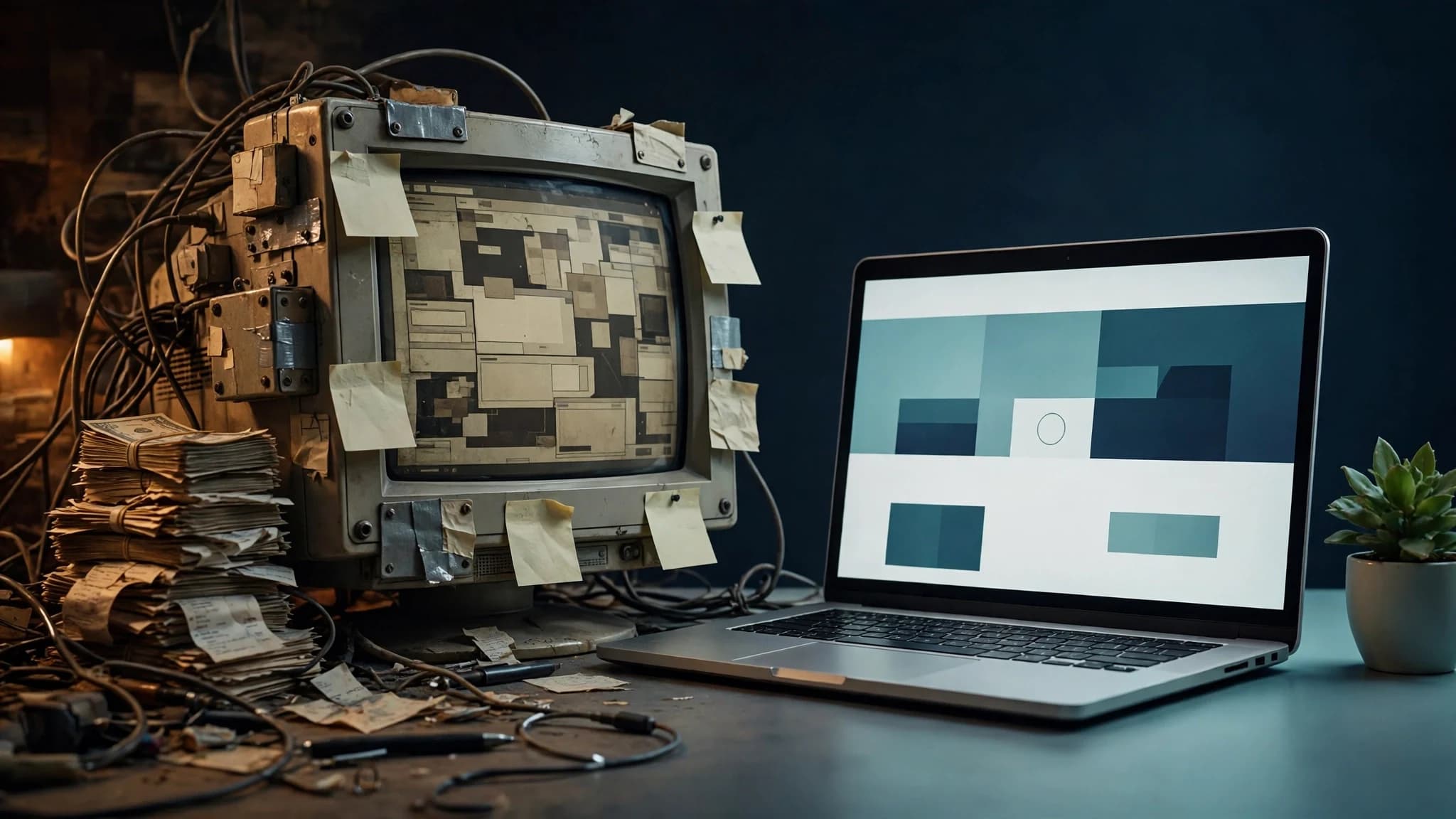
Why businesses keep websites they have outgrown
A business owner rarely starts the day thinking about programming languages. They want customers to find them, understand what they offer and get in touch.
But websites accumulate compromises. A plugin handles booking. Another handles forms. A page builder controls the layout. Someone adds a workaround because changing the original setup is too difficult. Eventually, a simple update becomes something you avoid.
The site still loads, so replacing it feels optional. Meanwhile, you keep paying for the arrangement and working around its limitations.
Cost has been a major reason to stay put. So have worries about losing search visibility, breaking a booking system or having to learn everything again. Those are legitimate concerns. A worthwhile rebuild needs to address them, rather than just offer a nicer homepage.
The PHP security incident raises a bigger question
On October 21, 2026, PHP released fixes for two critical vulnerabilities that could allow unauthenticated remote code execution. Its maintainers urged users to update immediately. These were problems in PHP itself, not simply a badly maintained WordPress plugin.
OpenAI reported that researchers used AI to identify a critical flaw, while Wiz independently discovered and reported both vulnerabilities. Its disclosure also warned that similar capabilities could help attackers develop exploits. AI-assisted security research is already happening.
For an affected business, the immediate job is to get the existing system protected. Planning a new website does not replace patching the one customers use today.
The longer-term question is what you want to keep maintaining. How many components does your site depend on? Who handles updates? Can you make changes confidently, or does every change feel like a risk?
PHP is actively maintained, and its age alone does not make it obsolete. But business owners are entitled to question whether their particular setup is still the right fit. You do not have to wait for a platform to disappear before deciding you can do better.
PHP 8.5.12 security release announcement
Wiz Research: PHP2Shell, critical RCE vulnerabilities in PHP
AI is changing the replacement calculation
AI can help with understanding existing code, writing a replacement and preparing tests. That creates an opportunity to reduce development effort, provided someone still checks that the result works properly.
For a local business, the project may be much simpler: replace a frustrating website with one built around the way the business actually works.
The useful comparison includes the full cost of each option. What does the current site cost to host, maintain and update? What would a replacement cost to build and run? Would it make customer inquiries easier to handle? Would you gain control over your content and assets?
A cheap rebuild that breaks important functionality is expensive. A well-planned rebuild that removes recurring problems may be worth far more than its initial price.
A better website needs to serve people and their agents
There is another reason to rethink what your website does. As customers use AI assistants to research businesses, your information needs to make sense outside the experience of someone clicking through every page.
Imagine a customer asking an assistant to compare local window-treatment companies, explain motorization options and find out how to schedule a consultation. A beautiful image is useful to the customer, but it cannot answer all of those questions by itself.
Your site should clearly explain what you do, where you work, what experience supports your recommendations and how someone takes the next step.
That is why Kodecite combines answer-first content with connected business information and structured data. Relevant third-party sources give readers and systems something to check. Schema makes relationships explicit; it does not turn an unsupported claim into proof.
The aim is to make a good business easier to understand, verify and contact. The business still has to earn its reputation and deliver for its customers.
Why we build with Next.js
We use Next.js as the foundation for Kodecite websites because it gives us control over how the site is built and how its information is presented. We can build around a client's needs without depending on a WordPress theme and its plugin stack.
That does not make a Next.js site maintenance-free or automatically secure. Its dependencies, accounts and integrations still need attention. The value comes from the implementation: keeping unnecessary complexity out, testing the important customer journeys and making ownership clear.
Clients should also have choices after launch. They can own their website assets and manage them, or choose ongoing help. Paying for convenience should not mean being trapped with the provider who built the site.
Already planning a new website? Compare before you commit.
If you are being quoted $5,000, $6,000 or $10,000-plus for a new WordPress website, take a step back before signing. At that budget, you should be comparing what different approaches can deliver, rather than assuming WordPress is the default.
Ask what you will own, what ongoing maintenance will cost, how many plugins the site will depend on and how easily it can adapt as customers increasingly use AI assistants to research businesses. Ask the developer why their recommended technology is the right fit for your business.
A WordPress proposal may have a sound justification. But when a leaner, purpose-built alternative can meet your needs at a comparable price, choosing it now may save you from paying for another rebuild later. You are investing in the next version of your business, so make sure you are evaluating the options available today.
When replacing your website makes sense
If your site works well, is properly maintained and supports the business, a security headline alone is not a reason to rebuild it.
But if you are already unhappy with the costs, limitations or lack of control, the old assumption that replacing it is unaffordable may deserve another look.
At Kodecite, that is the conversation we want to have: what is your current website preventing you from doing, and can a better foundation now make financial sense?
Questions about this topic
Should every business move away from WordPress?
No. Evaluate your actual site, maintenance costs, required features and goals. A well-run WordPress site may still suit your business. A difficult, costly setup is worth comparing with alternatives.
Does moving to Next.js eliminate security risks?
No. It removes reliance on PHP if the replacement does not use PHP services, but introduces its own software and operational responsibilities. Security depends on the whole implementation and ongoing upkeep.
Can a rebuild preserve existing search visibility?
A migration can be planned to preserve important content, URLs and customer functions, with redirects where needed. Search performance still needs monitoring; nobody should promise that a rebuild carries zero ranking risk.
Keep reading
- Why What Your Website Is Built On Matters More Than How It Looks →
- How Much Does a Small Business Website Cost? →
- Why Doesn't ChatGPT Recommend My Business? →
Put the next improvement in scope.
See how we approach website design and SEO foundations, then compare the scope and pricing. If you are unsure where to start, request a review of your current website.
Request a free readiness review →